
.webp)


.webp)
-(1).webp)
-(1).webp)
-(1).webp)


-(1)-(1)-(1).webp)


Miembro aliado de IATO
Asociación India de Operadores Turísticos
Ver certificado de membresía

.webp)

Elephanta Caves located on Elephanta Island in Mumbai Harbour in West India. It is one of the most famous heritage sites of the country. Elephanta Caves are renewed for its ancient rock-cut temples and beautiful stone carvings. This site represents the incredible skills of early Indian artists. Most caves are dedicated to Lord Shiva. You can easily reach there by a short ferry from the Gateway of India. It is a peaceful island which offers a blend of history, nature, art and spirituality.
Elephanta Caves are believed to have been built between the 5th and 7th centuries during the rule of the Kalachuri or Chalukya dynasties, although the exact creators are still unknown. The island was originally called Gharapuri which means “City of Caves” and it served as an important place for worship and cultural activities.
When the Portuguese reached the island in the 16th century, they found a large stone elephant sculpture and renamed the place Elephanta Island. This statue is now kept safely in the Bhau Daji Lad Museum in Mumbai. Over the years, some parts of the caves were damaged but many sculptures and carvings still remain in good condition. In 1987, UNESCO declared Elephanta Caves a World Heritage Site, acknowledging its historical and artistic value. Today, it stands as a proud reminder of India’s ancient craftsmanship and continues to attract travelers across the globe.
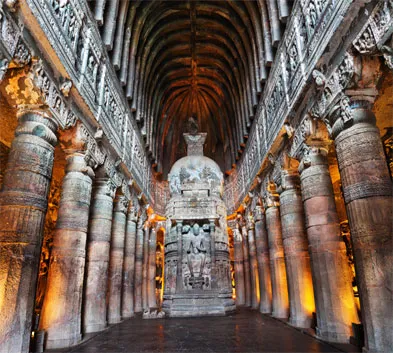
The art and architecture of Elephanta Caves show how skilled and creative ancient Indian craftsmen were. These caves were carved out of solid basalt rock using simple tools, which makes their design even more amazing. It is dedicated to Lord Shiva and features strong pillars, wide halls and detailed stone carvings.
The most famous sculpture here is Trimurti which is a three-faced statue of Shiva that shows him as the creator, protector and destroyer. This 20-foot tall artwork is the pride of Elephanta and one of the greatest masterpieces in Indian history. You can also see carvings of Shiva as Nataraja, Ardhanarishvara and scenes like the marriage of Shiva and Parvati. These caves follow a mandapa-style layout with large halls supported by stone pillars. The symmetry, balance and fine detailing show the advanced skills of the artists from that time.
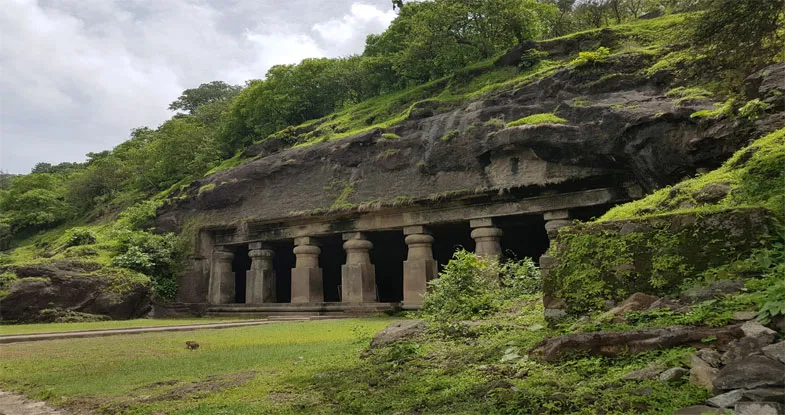
Elephanta Caves hold strong cultural and spiritual importance, especially for the followers of Lord Shiva. Most of the carvings in the caves are based on stories from Hindu mythology which shows Shiva in different moods and forms. These stone panels tell ancient stories of his power, compassion and role as the creator, protector and destroyer of the universe.
The most famous sculpture here is Trimurti which is often called the heart of Elephanta. Its three faces include calm, fierce and nurturing, which beautifully represents the balanced energies of Lord Shiva. These carvings are not only religious symbols but also masterpieces of early India art. For many centuries, Elephanta Island has been a peaceful place for meditation and worship. Even today, travelers feel a sense of calm inside the caves. The annual Elephanta Festival adds to this cultural legacy with music, dance and traditional performances.
Asociación India de Operadores Turísticos
Ver certificado de membresía
Ministerio de Turismo, Gobierno de India
Visitar el sitio oficial
Opiniones independientes de viajeros reales
Leer opiniones